

Educational Attainment Data
Percent of Minnesota's population with a degree
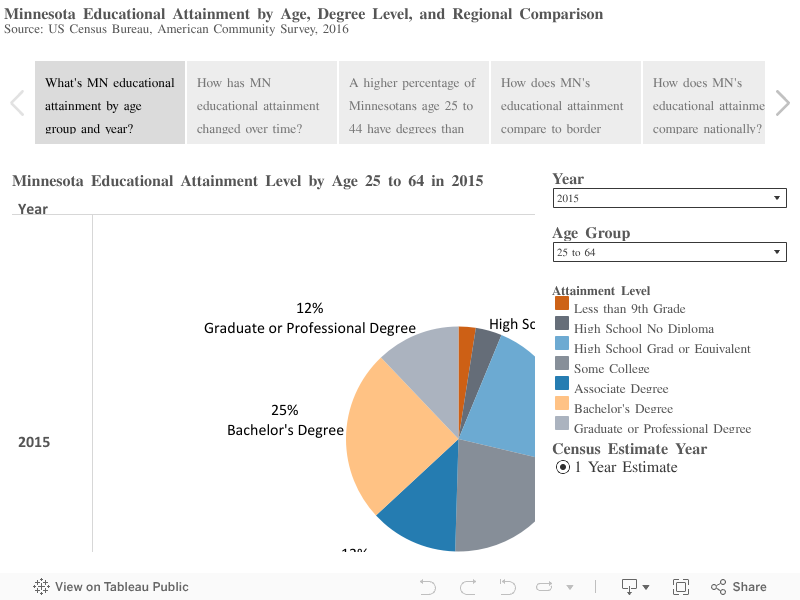
- Minnesota ranks 2nd (50 percent) nationally behind Massachusetts (52 percent) in the percentage of its population (aged 25 to 64) with an associate degree or higher. In the 25 to 44 age group, 54 percent have an associate degree or higher.
- The Minnesotan population is showing gradual increases in higher level educational attainment over time, particularly bachelor and graduate/professional degree level attainment.
- Minnesota has higher educational attainment at the bachelor and graduate/professional degree levels than border states - Wisconsin, Iowa, North Dakota and South Dakota - as well as most states nationally.
- While the percentage of Minnesotans (age 25 and older) with an associate degree or higher compares favorably nationally, disparities exist across racial groups (age 25 and older) with only Asian (51 percent) and White (48 percent) Minnesotans exceeding the state average (46 percent). More data on education attained by Minnesota cultural groups.
- Employment levels increase with each level of education along with median wages for Minnesota adults (age 25 and older).
Minnesota's populations growing the fastest have historically not been adequately served within Minnesota's educational system. The state's changing demographic profile requires the state begin reducing these gaps to ensure economic prosperity for all. Minnesota's Educational Attainment Goal 2025 is aiming to increase the percent of the population age 25 to 44 with a postsecondary certificate or higher to 70 percent by 2025.
Minnesota and Twin Cities Area Rank High in Degree Attainment
A 2016 Lumina Foundation report ranked metropolitan areas with the highest percentage of their population, aged 25 to 64, with an associate degree or higher. Minneapolis/St. Paul ranked ninth (52 percent) behind San Jose (56), Washington D.C. (56 percent), Madison WI (55 percent), Boston (55 percent), Bridgeport-Stamford (54 percent), San Francisco (54 percent), Raleigh NC (54 percent) and Durham-Chapel Hill (53 percent).
Associate Degree or Higher Attainment for Minnesota Population Age 25 and Older by Race/Ethnicity, 2010 to 2015
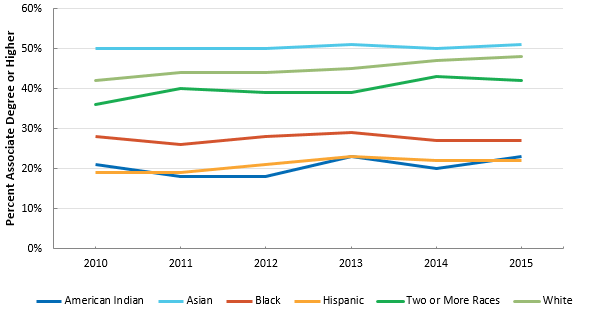
*Hispanics may be of any race. Data for Hispanics may overlap with data for other race groups.
Source: U.S. Census Bureau, American Community Survey
Educational attainment of Minnesota's population by 17 cultural groups.
Median Income Increases with Educational Attainment: Minnesotans Age 25 and Older, 2015
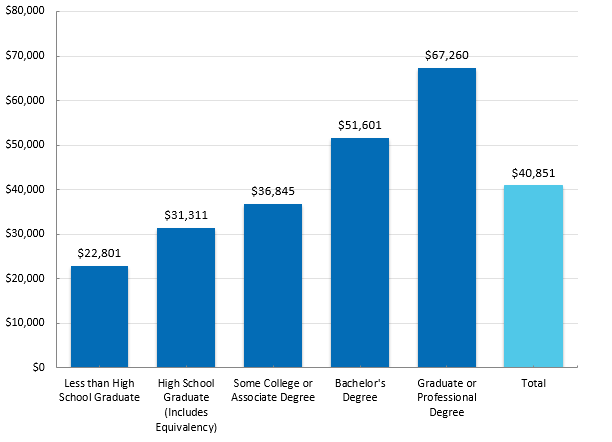
Note: "Some College" also includes those who completed one- or two-year certificate programs.
Median income in the past 12 months in 2015 inflation adjusted dollars.
Source: U.S. Census Bureau, 2015 American Community Survey 1-Year Estimates
Employment Rate Increases with Educational Attainment: Minnesotans Age 25 to 64, 2015
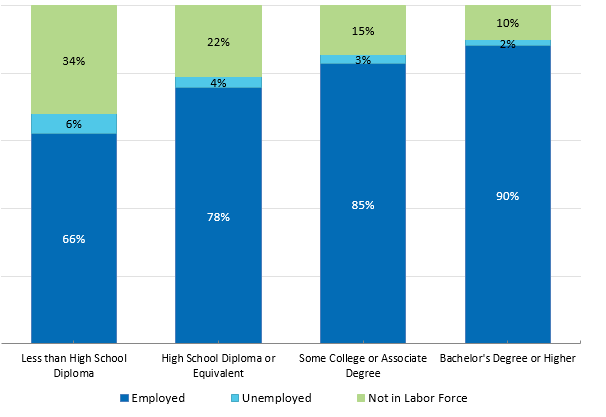
Note: "Some College" also includes those who completed one- or two-year certificate programs.
Source: U.S. Census Bureau, 2015 American Community Survey 1-Year Estimates
About educational attainment
Educational attainment refers to the highest level of education an individual has completed at the time the survey is conducted by the U.S. Census Bureau. The data is collected annually via the American Community Survey. Data on educational attainment are derived from a single question that asks, "What is the highest grade of school completed, or the highest degree received?" This question was first implemented in the 1990 Decennial Census and changed in the Current Population Survey in 1992. Prior to this, respondents were asked a two-part question asking respondents to report the highest grade they had attended, and whether or not they had completed that grade. The response categories for the educational attainment question vary slightly by survey, but generally include the following categories:
Educational attainment refers to the highest level of education an individual has completed at the time the survey is conducted by the U.S. Census Bureau. The data is collected annually via the American Community Survey. Data on educational attainment are derived from a single question that asks, "What is the highest grade of school completed, or the highest degree received?" This question was first implemented in the 1990 Decennial Census and changed in the Current Population Survey in 1992. Prior to this, respondents were asked a two-part question asking respondents to report the highest grade they had attended, and whether or not they had completed that grade. The response categories for the educational attainment question vary slightly by survey, but generally include the following categories:
- No schooling completed, or less than 1 year
- Nursery, kindergarten, and elementary (grades 1-8)
- High school (grades 9-12, no degree)
- High school graduate (or equivalent)
- Some college (1-4 years, no degree)
- Associate's degree (including occupational or academic degrees)
- Bachelor's degree
- Master's degree
- Professional school degree
- Doctorate degree
Individuals in the "some college" category have not completed a degree, but may have completed an occupationally specific certification below the associate degree or are still enrolled in college. In Minnesota, about the same number of students earn a certificate as those earning an associate degree annually. Minnesota is above average in the number of people completing certificate programs compared to other states.
Depending on the survey, the educational attainment question may be asked only of adult household members. Even when data are collected from all household members regardless of age, the U.S. Census Bureau generally publishes data only for adults. Most publications focus on adults aged 25 years and over, when education has been completed for most people.
Please Note:
- Accessing the Microsoft Excel file(s) on this page may require you to
download the free Excel Viewer from Microsoft
Related Pages
Related Links
- U.S. Census Bureau educational attainment information
- Have We Reached the Top? Educational Attainment Projections of the U.S. Population
- Certificates Count: An Analysis of Sub-Baccalaureate Certificates
- College Enrollment and Work Activity of High School Graduates
- Lumina Foundation report, A Stronger Nation through Higher Education
Quick Links
- Why College?
- Explore Your Interests & Careers
- Prepare at School
- Summer Academic Enrichment Program
- The Many Ways to Earn Credit for College
- Recommended High School Classes & Graduation Requirements
- Advice for Students with Disabilities
- Succeed as an Adult Student
- Useful College Prep Resources
- Minnesota Goes to College!
- Collecting Data from Minnesota Postsecondary Institutions
- Campus Financial Aid Administrator Resources
- Statewide Financial Aid Conference
- Campus Student Enrollment Reporting Resources
- Ordering Materials for Your Students
- Supplementing Your College Counseling
- Early Awareness Efforts
- Student Homelessness in Higher Education Resources
- Shared Library Resources
- MN FAFSA Tracker
- Campus Sexual Violence Prevention and Response
- Statewide FAFSA Filing Goal
- MyHigherEd
- Online Applications
- About Financial Aid
- What Does College Cost?
- Tips for Lowering the Cost of Higher Education
- Financial Aid You Don't Repay
- Financial Aid You Must Repay (Student Loans)
- Institutional Payments
- Financial Aid You Earn
- Military Service Education Benefits
- Reduced Out-of-State Tuition Options
- Education Tax Benefits
- Public Service Loan Forgiveness
- Useful Online Resources
- Ready, Set, FAFSA!
- Minnesota Paramedic Scholarship
- Data Maps and Infographics
- Educational Attainment Goal 2025
- Minnesota P-20 Statewide Longitudinal Education Data System
- Minnesota Measures
- Student Enrollment Data
- College Readiness & Participation Data
- Degrees, Graduation Rates, Attainment & Outcomes
- Tuition & Fees Data
- Student Health and Safety
- Financial Aid Data & Trends
- Institution and Data Search
- Transfer Students
- Research Reports
- A-Z Data Table Index
- Postsecondary Funding
- Special Student Populations